
Boxing and Muay Thai are both well-known options for engaging in combat activity. Both, nevertheless, have advantages and disadvantages of their own. This article explains the key distinctions between the two if you live in Tacoma, Washington, and are unsure about which to pick. This article will assist you in determining whether striking art is a good fit for you.
Muay Thai vs Boxing?
Which One Is Right For You?
You may learn how to effectively hurl your hands at someone’s face and body through boxing. Pivots, strong lateral movement, and front-to-back movement are all taught in this technique. You will be alright if you compete and can maintain your opponent at the proper range, but this is usually difficult. However, you will not benefit from boxing’s defense and stance, and you are only learning half of Muay Thai’s permitted offenses.
Muay Thai vs Boxing
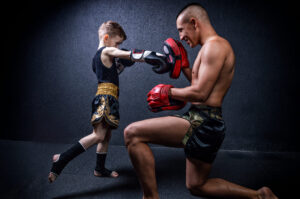
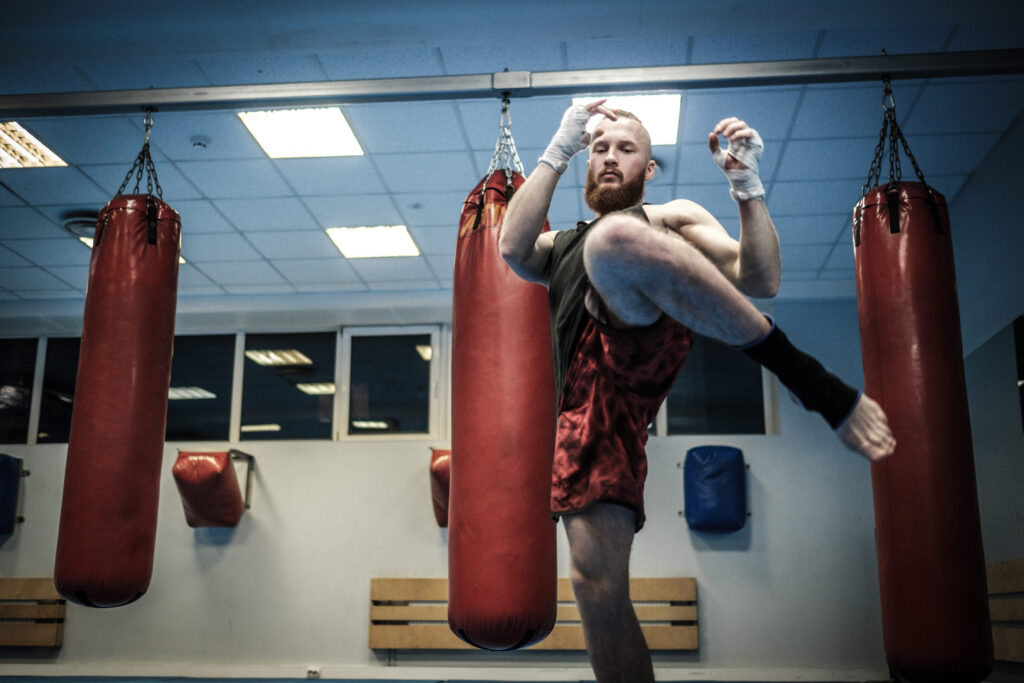
Because the shin bone is denser than the knuckles and has no cushioning, Muay Thai kicks may produce nearly twice as much force. Blocking with one arm can cause serious harm to your hand, shoulder, and forearm. You have to learn how to block with both hands as well as your legs and shins (also called checks). Before engaging in a battle or contest, I would advise attending a Muay Thai school to at least learn the proper defenses against their strikes. Cross-training has no drawbacks. It would be fantastic to combine boxing’s punches and lateral mobility with Thai fighters.
Muay Thai vs Boxing: Major Differences
Weapons, Define, Stance, and Guard
Boxers have a blade posture, with their shoulders rolled to protect their chins and their heads off center. With few targets exposed, it’s ideal for slipping and counterattack. In Muay Thai, you square up more to check with both legs and repel kicks. Your chin is shielded, but you maintain your eyes ahead to read knees and clinch entry. Your hands sit higher to intercept kicks and elbows. Your lead leg becomes a target for low kicks if you adopt a boxer’s bladed posture in Muay Thai. You’ll be positioned for straight strikes in the future if you use a Thai square stance when boxing.
Scoring, Rhythm, and Range
Three ranges are used in boxing: inside (infighting), mid (combinations), and long (jabs). The engine consists of angles, feints, and head movement. Range gives Muay Thai a more upright rhythm and increases kick and clinch range. The knee, the check, and the teep must all be respected.
The Jab vs the Teep
In both sports, the jab, or choke with the lead hand, is your steering wheel. It opens combinations, blinders, and sets angles in boxing. Although the jab is still useful in Muay Thai, the teep frequently takes its place as the main technique for controlling distance. When it is off-balance, a hard trip to the hip line or belly prevents entry and scores nicely.
A Thai fighter will timing the teep to the torso or thigh when a boxer steps heavily to jab. Practical advice: If you’re a boxer transitioning to Muay Thai, you should learn how to jab off a little hop or behind a check to reduce the availability of your lead leg. Sharpen the volume of your double and triple jabs to replace your natural tendency to teep if you’re a Thai fighter just starting out.
Boxing Defense against. Low Kicks
When facing blows, boxing head movement, slips and weaves, is exquisite. In opposition to kicks? A quick trip to the emergency room occurs when a right hand is slipped into a left round kick. You “defend down” initially in Muay Thai by stepping out, checking with the shin, or intercepting. Slipping a jab right and eating a southpaw body kick is a classic trap. Solution: To avoid hanging in kick range with your weight moved, use a more neutral stance in Thai, practice your checks, and conceal your head movement inside your striking combos.
Infighting vs Clinch
Elbows-in, head-on-chest, short uppercuts, and hooks are all part of boxing. The Muay Thai clinch, also known as the “chern,” starts with posture: hands competing for inside position on the neck and biceps, head tall, and hips in. You off-balance to land ti khao (knees) or ti sok (elbows). A boxer will be folded if they shell out in a clinch. In a boxing clinch, a tall Thai will be bumped and struck. If you cross-train, develop a “clinch switch.” For example, if the boxing referee breaks while you’re still training in Thai, learn to pummel the inside ties and knee right away.
Kicks, Shells, and Head Movement
Philly shell or peek-a-boo? If you adjust, both may be used in Muay Thai. It’s OK to turtle with a high shell to block kicks and elbows, but if you’re being pushed or unbalanced, it might cost you points. Shoulder rolls might make checks difficult and reveal the ribcage.
Compact, high guard with active forearms to parry and catch kicks, micro head movement in conjunction with foot repositioning, and a disciplined check on any weight transfer constitute the safe middle ground.
Practice Techniques & Training Exercises
Do you want to transfer skills without forming undesirable habits? Organize your rounds. To avoid confusing your body, keep “pure” and “hybrid” rounds apart. To stop the major leaks, lead leg fragility for boxers, boxing angles and volume for Thai stylists, use pads and exercises.
Drill 1: Control Rounds with Jab-Teep
- Objective: In Muay Thai, replace or enhance your jab with a dependable teep. 4 x 3 minutes in round format.
- Round 1: only jab against forward pressure from the partner; pay attention to head posture and range.
- Round 2: teep alone; to off-balance, go for the hip and belt lines.
- Round 3: teep into jab (teep-1), jab into teep (1-teep). In order to preserve the lead leg, add a low kick check before you jab or teep in round four.
- Coaching cues: don’t lean back so much that you can’t follow with a jab, stand tall on the teep, and keep your toes high. After the jab, boxers should maintain a light lead leg.
Drill 2: Boxers’ Anti-Low-Kick Blueprint
- Objective: Make your lead leg a difficult target. five rounds of two minutes on pads. Every three to five seconds, the feeder delivers a short low kick; you check, reply 1-2 or 2-3 (jab-cross or cross-hook), or step-out right hand.
- Variation: Use your own body kick or calf kick to check and counter. Finally, add a controlled contact “live” round.
- Coaching cues: following the check, land and punch right away—don’t wait for perfect balance; knee points out, shin firm, heel slightly up. In order to deter kickers, this strengthens your rhythm.
Drill 3: Clinch-to-Strike Flow
- Objective: Maintain your position in Chern. Three sets of three minutes each.
- Set A: administer five knees while off-balance, lock a single collar tie, pummel for inside position, and then leave with a high guard and a brief elbow move (shadowed, for safety).
- Set B: stride to the corner, snap down to become unbalanced, knee twice, release, and post-frame to keep room.
Set C: circle out, score a teep, and defend a body hold by framing the hip and biceps. Don’t be too technical.